
India has a comparative edge over key competitors in a majority of products it exports to the US and stands to gain market share as the US raises tariffs on its major trade partners, NITI Aayog said on Monday. In its quarterly trade report, it recommended that the government fast-track the India-US free trade agreement with time-bound goals to resolve non-tariff barriers and finalise digital trade rules on data flows and e-signatures to support services exports.

The smartest homes are not the ones that dazzle with tech, but the ones that disappear into your daily life while quietly elevating it.
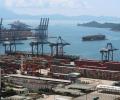
India's major imports from the US include crude oil and petroleum products, gold and jewellery, plastics, aircraft, and electrical machinery and components. The key exports to the US comprise pharmaceuticals and biologicals, telecom equipment, precious and semi-precious stones, petroleum products, gold and precious metal jewellery, and ready-made garments.
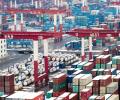
India's trade deficit with China neared $100 billion in FY25, amid escalating concerns of dumping, data released by the commerce department on Wednesday showed. Chinese imports rose by 11.5 per cent to $113.45 billion, while outbound shipments to the neighbouring country saw 14.5 per cent contraction to $14.2 billion.
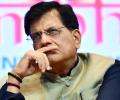
A government official said India and the US are exploring an interim trade deal within 90 days.

With US President Donald Trump "temporarily suspending" country-specific reciprocal tariffs until July 9, India sees the three-month window as an opportunity to renew its push for a proposed bilateral trade agreement (BTA) with the US and expedite finalisation of the first tranche of the trade deal.
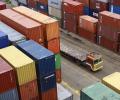
The US Trade Representative noted that India's average applied tariff rate stood at 17% per cent, the highest of any major world economy.

'Reciprocal tariffs are not going to affect India except specific sectors and there are opportunities to capture.'

Proceeds from the sale will support the training of future generations of doctors at the Oslo University Hospital. The fascinating story behind the Husain painting which set a new record for modern Indian art.

Since India relies heavily on specialised imported fasteners for critical applications in industries, such as automobiles, aerospace, electronics, and defence, their sudden unavailability will jeopardise production.

'And America will invite India in to have really an extraordinary opportunity and relationship with us.'

I'...additional concessions, such as opening government procurement, reducing agricultural subsidies, weakening patent protections, and allowing unrestricted data flows -- demands India has resisted for decades.'

'Every Indian should move to an EV, and the government should not buy any fossil fuel cars. The government should become the first driver of EV adoption.'

'The US has agreed to negotiate with us a mutually beneficial bilateral trade agreement, which will go for reduction of tariffs on both sides so that our trade can grow.'

Ahead of the visit, officials from key government departments held intense discussions to identify key trade-related proposals.

'For the Indian economy to maintain a growth rate of 7 to 8 per cent, it needs large foreign direct investment coming in, and that's mainly coming from the US.'

'We have to be prepared for the larger disruption that is likely to take place.'

'Our fractured world has been embroiled in wars and hatred, and many sessions reflect these concerns.'
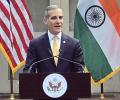
'...I'll say this to my fellow Americans, the more ties that we have to more Indians and the more ways we can find to grow our economic and educational exchanges, the stronger America and India.'
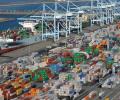
The Federation of Indian Export Organisations (FIEO), the apex body for exporters, is formulating a strategy for five key sectors to boost exports to the United States (US), as President-elect Donald Trump has threatened to impose high tariffs on Chinese goods. "This time, we need to be proactive instead of reactive.
 © 2026 Rediff.com - Advertise with us - Disclaimer - Privacy Policy - Sitemap - Feedback - About us - Terms of use - Grievances